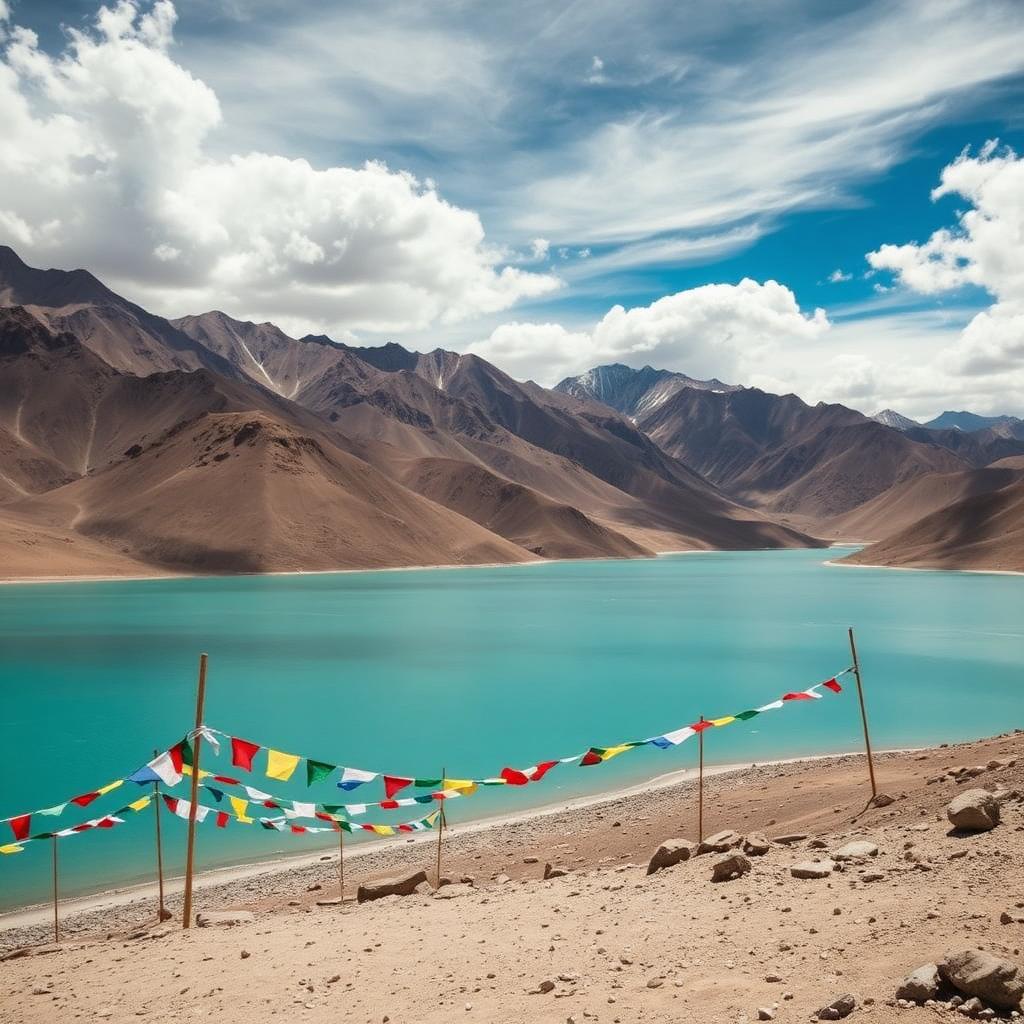
Fly in — don't drive in (the first time)
The Manali–Leh and Srinagar–Leh highways are legendary, but they're a hard sell for a first trip. You'll spend three days getting there, arrive exhausted, and still need to acclimatise. Fly into Leh (IXL) instead — Delhi is a 90-minute hop — and use those saved days on the ground. You can always drive out on the way back if the season is right.
Hopigo tip
Book the earliest morning flight. Leh's weather window closes by noon and afternoon flights cancel routinely.
The 48-hour rule
Leh sits at 3,500m. Your first two days are for doing almost nothing — walk slowly, drink four litres of water, skip alcohol, sleep early. This isn't optional. Most cases of AMS (acute mountain sickness) are people who tried to 'do' Pangong on day two. Use the time well: Leh Market, Shanti Stupa at sunset, a quiet monastery like Shey or Thiksey the second afternoon.
Hopigo tip
Ask your hotel for a Diamox consultation on arrival. 125mg twice a day, started the morning before you fly in, dramatically cuts AMS odds.
The classic 6-day loop
Day 1–2: Leh, acclimatise. Day 3: Leh → Nubra Valley via Khardung La (5,359m). Sand dunes and double-humped camels at Hunder. Day 4: Nubra → Pangong Tso via the Shyok route (spectacular, and skips the second high pass). Overnight at Pangong. Day 5: Pangong → Leh via Chang La. Day 6: fly out, or add a day for Sham Valley (Alchi monastery, Magnetic Hill, Sangam). This is the itinerary that works — don't try to add Tso Moriri unless you have nine days.
Permits and the Inner Line
Nubra, Pangong and Tso Moriri all need an Inner Line Permit. Indian nationals apply online at lahdclehpermit.in; foreign nationals get a Protected Area Permit through a registered agent. Carry six photocopies — every checkpoint keeps one. Your tour operator (us, if you're on a Hopigo package) handles this end-to-end, but always double-check the dated permit before leaving Leh.
The car matters more than the driver
Insist on an Innova Crysta or a well-maintained Scorpio, not a Sumo or an old Xylo. The roads above Khardung La are cratered by August, and the last stretch to Pangong is a spine-rattler. A good local driver from Ladakh (they're all union-registered — non-Ladakhi drivers can't legally drive tourists) is worth more than any five-star hotel upgrade.
Hopigo tip
Sit in the front for the first day. It genuinely helps with motion sickness at altitude.
When to go
Mid-June to mid-September is the operating window. July is the busiest and the greenest. Early September is the sweet spot — clear light, thinner crowds, and the barley fields turn gold. September nights get cold at Pangong (below zero even in the tents), so pack accordingly. October to May, the passes close and most hotels shut.
What to pack that people forget
Lip balm with SPF (the sun at 4,500m destroys skin), a proper down jacket even in July, a reusable water bottle with a filter (villages don't need more plastic), a headtorch for Pangong campsite loo runs, and hard cash — ATMs work only in Leh. And leave the drone at home; most of Ladakh is a restricted zone.
Ready for the mountains?
Take a look at our six-day Leh Ladakh Expedition — permits, driver, oxygen and hotels already handled.
See the itinerary